A New Jewish Search Is Emerging in Israel
Since October 7, we have been meeting young Israelis asking questions they had never seriously asked before: Who am I? What does being Jewish mean to me? What is the story I am fighting for?
Mevakshei Panecha is a Beit Midrash and community built for that moment.
A place in Ma’alot where young Israelis can encounter Torah, Jewish identity and community seriously — without being asked to pretend they are somewhere they are not.
October 7 Changed More Than Israel’s Sense of Security
For many Israelis, Judaism had always been somewhere in the background: family, holidays, history, army service, perhaps a Friday-night meal. But it had never become a serious personal question.
Then came October 7.
Soldiers found themselves risking their lives beside Jews from every corner of Israeli society. Families experienced grief, courage and solidarity on a scale few had imagined. Questions that had once felt distant suddenly became close.
What connects me to this people?
Where does our story begin?
What does Judaism have to say to my life?
Not everyone asking those questions wants to “become religious.” That is not where we begin.
We begin with the fact that a question has opened.
We call the person who has begun that search the October 8th Jew.

A New Jewish Search Is Emerging in Israel
Since October 7, we have been meeting young Israelis asking questions they had never seriously asked before: Who am I? What does being Jewish mean to me? What is the story I am fighting for?
Mevakshei Panecha is a Beit Midrash and community built for that moment.
A place in Ma’alot where young Israelis can encounter Torah, Jewish identity and community seriously — without being asked to pretend they are somewhere they are not.
October 7 Changed More Than Israel’s Sense of Security
For many Israelis, Judaism had always been somewhere in the background: family, holidays, history, army service, perhaps a Friday-night meal. But it had never become a serious personal question.
Then came October 7.
Soldiers found themselves risking their lives beside Jews from every corner of Israeli society. Families experienced grief, courage and solidarity on a scale few had imagined. Questions that had once felt distant suddenly became close.
What connects me to this people?
Where does our story begin?
What does Judaism have to say to my life?
Not everyone asking those questions wants to “become religious.” That is not where we begin.
We begin with the fact that a question has opened.
We call the person who has begun that search the October 8th Jew.
We See It in People’s Lives
The numbers matter. But what convinces us most is what we are watching happen to actual people.
From Nova to Building a Jewish Home
Nehorai survived the Nova massacre. What followed was not a neat or instant transformation, but a serious search for meaning, Torah and belonging. Today he is married and building a Jewish home.
A Journey That Became His Own
Dennis arrived with his own history and his own questions. Over time, Torah stopped being something outside his life and became something he chose to take seriously. The choices that followed were his own, made step by step.
No Two Journeys Look the Same
Some begin keeping Shabbat. Some begin learning regularly. Some discover, perhaps for the first time, that Judaism can become a language for their own lives. We do not measure every person by the same endpoint.
A Beit Midrash Can Teach Torah. A Community Can Become Home.
The community has become one of the most important parts of Mevakshei Panecha.
People do not only come for a shiur. They come because someone notices when they are missing. They have people to sit with on Shabbat, friends who understand the questions they are carrying, rabbis who know their story, and a table to return to.
There are Thursday-night gatherings, Shabbat meals, learning, prayer, trips, celebrations and weddings. There are also difficult days. The point is not constant inspiration. The point is knowing that you belong somewhere.
This sense of home is not separate from the Torah learning. It is often what makes serious learning possible. A person who feels safe enough to belong can also become brave enough to ask.


First, Learn the Person
We do not begin with a program that everyone is expected to fit into. We begin by trying to understand the person who walked through the door.
Who is he? What has he lived through? What brought him here? What is he looking for — and sometimes, what is he not looking for yet?
Come As You Are
There is no entry requirement to change lifestyle, appearance or identity. A person is allowed to begin where he actually is.
Someone Knows You Personally
Personal mentorship is central. Students have regular one-on-one time with a rabbi who knows their story and stays with them over time.
Ask Anything
Faith, doubt, God, suffering, halachah, relationships and identity are legitimate subjects. Serious questions belong inside serious Torah learning.
Belong Before You Define Yourself
People can experience Shabbat, prayer, friendship and community before deciding what label — if any — they want to use.
Torah Is Taken Seriously
Acceptance does not mean lowering the content. Students meet Tanach, Gemara, halachah, Jewish thought and faith as adults.
There Is No Stopwatch
People grow at different speeds. This is not a process with a hidden deadline. The relationship does not disappear because somebody takes time.
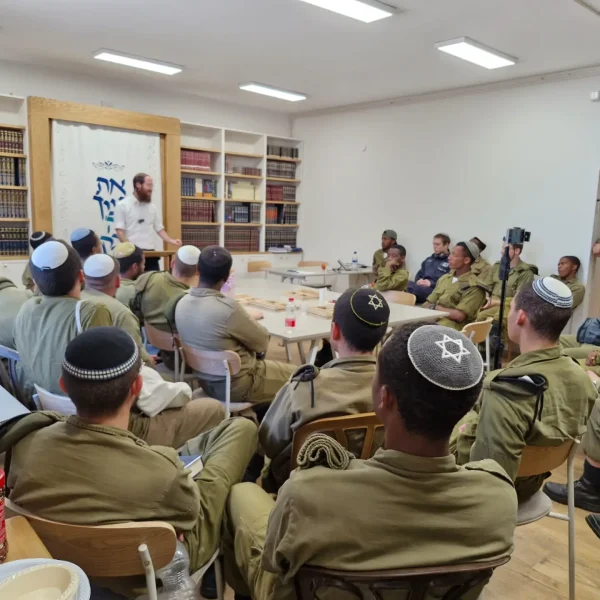
A Living Beit Midrash. A Growing Community.
What began as a response to a need has become a real home for a growing circle of young Israelis.
The Goal Is Not to Keep People Inside the Beit Midrash
We want Torah and Jewish identity to become part of real lives.
That can mean a stronger relationship with Shabbat, years of serious learning, building a Jewish home, taking responsibility for others, or simply discovering that Judaism has become something personal rather than inherited.
Five weddings have already grown out of this young community. For us, those moments are not statistics. They are reminders that a Jewish search can eventually become a Jewish future.

Built on Relationships — Led by People Who Believe in Them
A model built around personal accompaniment depends first of all on the people doing the accompanying.

Rabbi Noam Oster
Rabbi Noam has more than a decade of experience connecting Jews with little previous connection to traditional Jewish life to Jewish identity in a warm, open and welcoming way.
Trained as a combat soldier in the IDF’s Kfir Brigade, he later served for five years as rabbi of Tal-El, a largely non-religious community in Northern Israel.
He has led the Beit Midrash and community from the day Mevakshei Panecha was founded, and remains at the heart of its educational culture, personal warmth and deep sense of home and belonging.
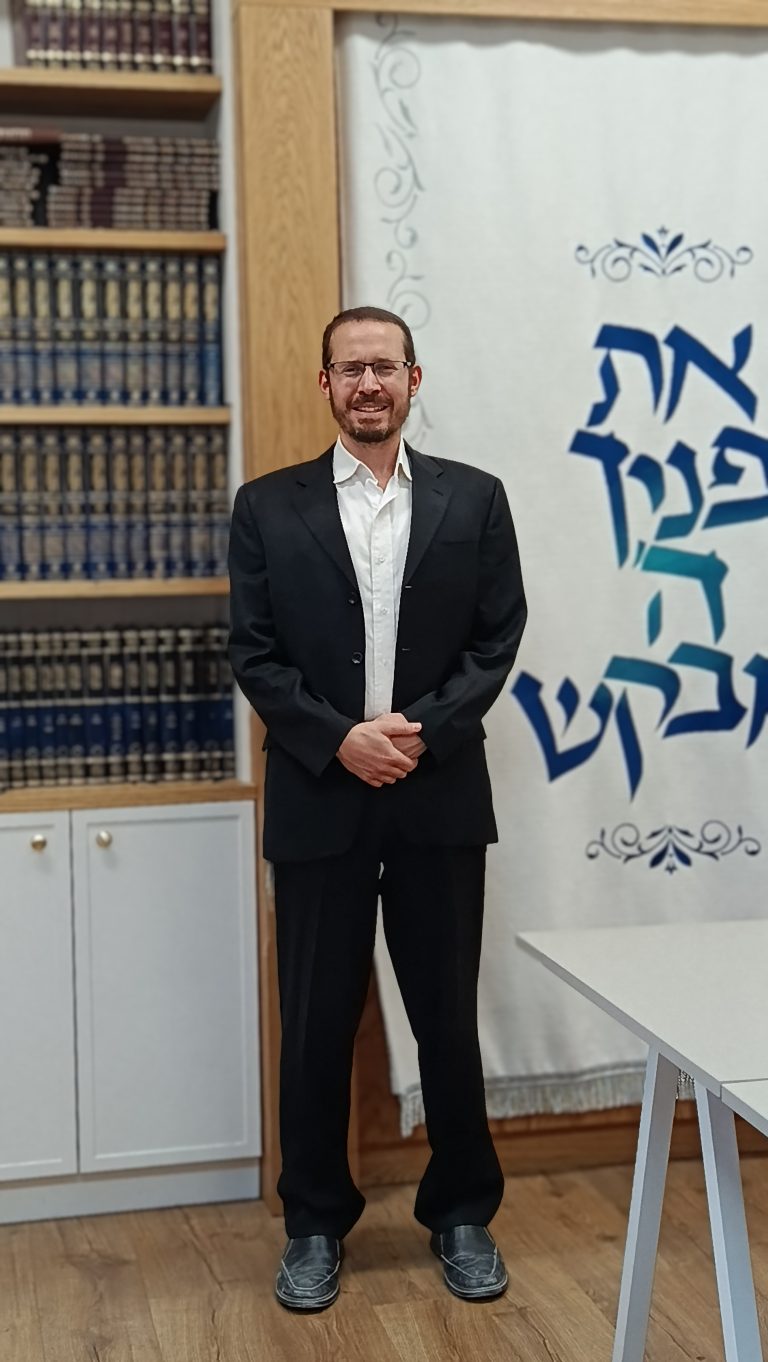
Rabbi Avichai Epstein
Rabbi Avichai serves as an IDF reserve brigade rabbi and has spent more than 600 days in reserve service during the war.
Much of what drew him into this work came from conversations with soldiers themselves: Jews fighting for the country while asking, sometimes for the first time, what connects them to its Jewish story.
Today he builds relationships with rabbis, communities and partners abroad — sharing what is happening in Israel and exploring what it may mean for the wider Jewish world.